WebAR for Brands: How Browser-Based Augmented Reality Drives Engagement and Sales
What WebAR is, how brands use browser-based augmented reality for try-ons, product previews, packaging and events, and how to plan one that works.
Quick answer
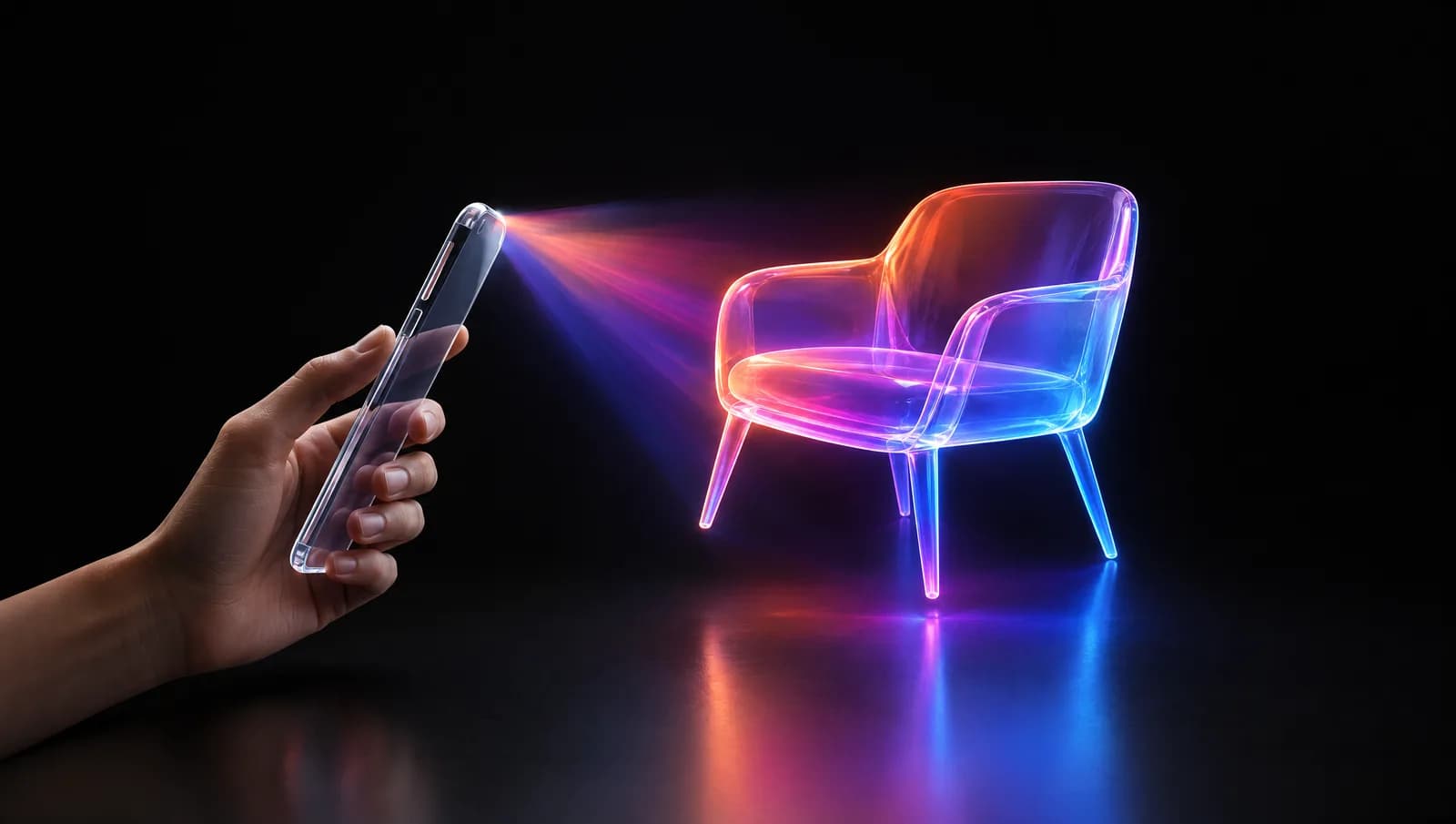
WebAR is augmented reality that runs in a phone's web browser, opened from a link or QR code with no app download. Brands use it to let customers place products in their room, try items on, bring packaging and print to life, run interactive games and add memorable moments to events and launches. Success depends on a clear purpose, optimised 3D assets, a fast load, a simple call to action and tracking of opens, interactions and conversions.
Augmented reality used to mean asking customers to download an app they would use once. WebAR removes that barrier. Scan a QR code on a pack or tap a link in an Instagram bio and, seconds later, a product sits on the customer's table, a character jumps off the label, or a sofa appears in their living room. Here is how brands use it, and how to plan an experience that performs.
What is WebAR?
WebAR is augmented reality that runs inside a phone's browser. It uses the camera to place digital 3D content into the real world, opened from a link, QR code or ad, with no app store involved. That single change makes AR practical for marketing, because almost everyone who sees the code can try it.
How do brands use WebAR?
| Use case | Example | Best for |
|---|---|---|
| Product preview | Place furniture, appliances or decor in your room | Home, electronics, retail |
| Virtual try-on | Glasses, jewellery, watches, makeup | Fashion and beauty |
| Interactive packaging | Scan the pack to see a story, recipe or game | FMCG, food and beverage |
| Print and outdoor | Posters and brochures that come alive | Launches and campaigns |
| Event activations | Photo moments, treasure hunts, product reveals | Exhibitions and retail stores |
| Education | 3D models explaining how something works | Healthcare, B2B, education |
Why does WebAR work for marketing?
Because it turns attention into interaction. People spend time with an experience they control, share what they create and remember the brand behind it. For e-commerce, seeing a product at true scale in their own space answers the question "will it fit and look right?", which is one of the biggest reasons people hesitate to buy online.
What makes a WebAR experience successful?
- One clear purpose. Decide whether the goal is sales, awareness, education or data capture.
- Fast loading. Optimised 3D models and textures, because people leave if it takes too long.
- Instant clarity. On-screen guidance that tells people what to do in the first second.
- A next step. A buy button, enquiry form, offer or share option inside the experience.
- Tracking. Analytics for opens, interactions, shares and conversions.
What do you need to create one?
Good 3D assets are the foundation. Products are modelled or scanned, optimised for real-time use and textured to look true to life. Then the experience is designed, built for the browser, tested on a range of phones and connected to analytics. Our 3D production team creates the assets in-house.
Where should the QR code or link live?
- On packaging and labels
- Product pages and Instagram bios
- Print ads, posters and brochures
- Event booths and retail displays
- Paid social ads that open the experience directly
How long does a WebAR project take?
A focused experience with one product can be built in a few weeks, longer if 3D assets must be created from scratch or the experience includes games and multiple scenes. Planning the goal and the assets early keeps timelines short.
Is WebAR the same as VR?
No. AR adds digital objects to the real world through a phone. VR places people inside a fully digital environment, usually through a headset or a 360 view. For property and hospitality, see our guide to virtual tours.
Want to put your product in your customer's hands?
We design and develop WebAR experiences, try-ons, product previews and event activations, with 3D assets made in-house. Explore our AR and VR development service or book a free AR idea session.
Work with us
AR / VR Development from The Coral Flow
Get a free AR idea session. Tell us about your product or space. We send back three immersive ideas tailored to your goals.
Frequently asked questions
What is WebAR?
WebAR is augmented reality delivered through a mobile web browser. Users scan a QR code or tap a link and the experience opens instantly, without installing an app.
What is the difference between WebAR and app-based AR?
WebAR removes the download step, so far more people try it. App-based AR can use more advanced device features and run longer, more complex experiences.
Do customers need a special phone for WebAR?
No. Most modern smartphones support WebAR in their default browser. Very old devices may fall back to a 3D viewer instead of full AR.
How do brands measure WebAR results?
Track scans or opens, time spent, interactions, screenshots or shares and clicks to buy or enquire, using the same analytics as the rest of the website.
Written by
Parves, Founder and Creative Director
Leads strategy and creative direction at The Coral Flow in Chennai, across web, search and content for brands in India and abroad.