SEO for Doctors in India: How Clinics Get Found on Google, Ethically
SEO for doctors and clinics in India: Google Business Profile, condition pages, patient education, trust signals and the 2026 NMC advertising rules.

Quick answer
SEO for doctors means making it easy for patients to find, trust and book your practice on Google. Start with a complete Google Business Profile for each clinic location, build a page for each condition and treatment you offer, write patient education reviewed by the doctor, show qualifications and registration clearly, and keep everything factual and within the National Medical Commission's advertising guidelines.
When someone in India feels a new symptom, the first doctor they consult is usually Google. They search the condition, read a few pages, then search for a specialist nearby and compare the clinics that appear. SEO for doctors is about being present and trustworthy at every one of those steps.
Healthcare is also the most regulated area of marketing. This playbook covers what works, and how to do it without crossing the lines set by the National Medical Commission and Google's own standards for health content.
Two rulebooks to understand first
The NMC's 2026 advertising guidelines
In October 2026, the National Medical Commission issued its Guidelines on Ethical Advertising and Public Communication, which apply to doctors and healthcare institutions across websites, blogs, social media, messaging apps and podcasts. Coverage of the guidelines, such as this summary by Medical Dialogues, describes restrictions on self-promotion, superlative claims like "best doctor", guaranteed outcomes, paid rankings and misleading reviews, while health education remains allowed.
Read the full document, or ask your legal advisor, before publishing promotional content. Everything in this guide is written to fit the spirit of those rules: factual information, education and accessibility, not hype.
Google's standards for health content
Google treats health topics as YMYL, short for Your Money or Your Life, because bad information can hurt people. Its guidance on creating helpful, reliable content asks whether content shows clear expertise and who created it. For a clinic, that means:
- Content written or reviewed by a qualified doctor, with their name shown
- Accurate, current medical information with sources where it matters
- Clear details of who runs the practice and how to reach it
Step 1: Set up Google Business Profile for every location
Most patients choose a clinic from the map results. For each location:
- Claim and verify the profile. Use the clinic's real name, as on the signboard and registration.
- Choose the most specific primary category, such as "Gynecologist", "Dentist" or "Orthopedic surgeon", and add relevant secondary categories.
- Add accurate hours, including consultation timings and holidays.
- Add services, with a plain description of each.
- Upload real photos: the entrance, reception, consultation room and equipment. Never upload photos of patients without explicit written consent.
- Add an appointment link that goes straight to booking.
Our Google Business Profile setup guide covers every field. If a profile ever gets suspended, our guide to reinstating a suspended Google Business Profile lists the documents that work for clinics.
Step 2: Build a website patients can use
The website is where a patient decides. It needs to be fast on a phone, easy to read and simple to book from. Our guide to medical website design covers the details; at minimum, include:
- A clear booking button on every page
- Doctor pages with qualifications, registration number, experience and areas of interest
- Clinic pages with address, map, timings, parking and directions
- Insurance and payment information, without quoting fees if your guidelines advise against it
Step 3: Create a page for each condition and treatment
Patients search for what they have, not what you call your department. "PCOS treatment", "knee replacement recovery time", "root canal pain after" are the searches that bring them to you.
For each condition or treatment you handle, create one page that answers:
- What it is, in plain language
- Common symptoms or reasons people need it
- How it is diagnosed or what happens at the first visit
- Treatment options and what recovery involves
- When to see a doctor urgently
- Who at your clinic treats it, with a link to their page
- How to book
Avoid outcome promises such as "100% success" or "pain-free guaranteed". Explain what typically happens and what can vary.
Use our keyword research guide to find the exact words patients use, often a mix of English and local terms.
Step 4: Publish patient education, reviewed by the doctor
Educational content is where doctors build trust before the first visit, and it is clearly allowed under the NMC's approach to public communication.
- Answer the questions patients ask at every consultation: preparation, recovery, diet, warning signs.
- Show the reviewing doctor's name and qualification on every article, with the date it was last reviewed.
- Link to authoritative sources such as national health bodies when you cite guidelines or figures.
- Update articles when treatment guidance changes.
A blog of honest, useful articles also feeds AI assistants, which increasingly answer health questions and cite the clinics behind good explanations. Our guide on writing content that ranks covers structure.
Step 5: Show trust signals clearly
Patients and Google both look for proof that a practice is legitimate:
- Medical council registration numbers for each doctor
- Qualifications and where they were obtained
- Hospital affiliations and memberships of professional bodies
- Clinic registration and accreditations, where applicable
- A clear privacy policy explaining how patient data from forms is handled
- Real photographs of the team and premises
Add Physician or MedicalClinic structured data to help search engines understand the practice. Our schema markup guide shows how.
Step 6: Handle reviews with care
Reviews strongly influence which clinic a patient picks, but healthcare adds two constraints:
- Privacy. Never confirm in a reply that the reviewer was a patient, or mention any treatment. Keep replies general and offer a phone number for follow-up. Our guide on responding to negative reviews includes a healthcare template.
- The 2026 NMC guidelines address misleading reviews. Never buy, write or incentivise reviews. Check the guidelines before running any structured review request programme.
Step 7: Make the technical basics solid
- Speed on mobile. Most patients search on their phones, often in a hurry. See our Core Web Vitals guide.
- Secure forms. Appointment forms must use HTTPS and collect only what is needed.
- One page per location for multi-clinic practices, each with its own address and timings.
- Clean indexing. Make sure Google can index your condition pages and that thank-you or patient portal pages are excluded.
Step 8: Measure what matters
Track booked appointments, not just visits:
- Appointment form submissions and booking clicks
- Calls from Google Business Profile and the website
- WhatsApp clicks
- Searches for each doctor's name
Set these up as key events in Google Analytics, following our GA4 setup guide.
A note on social media
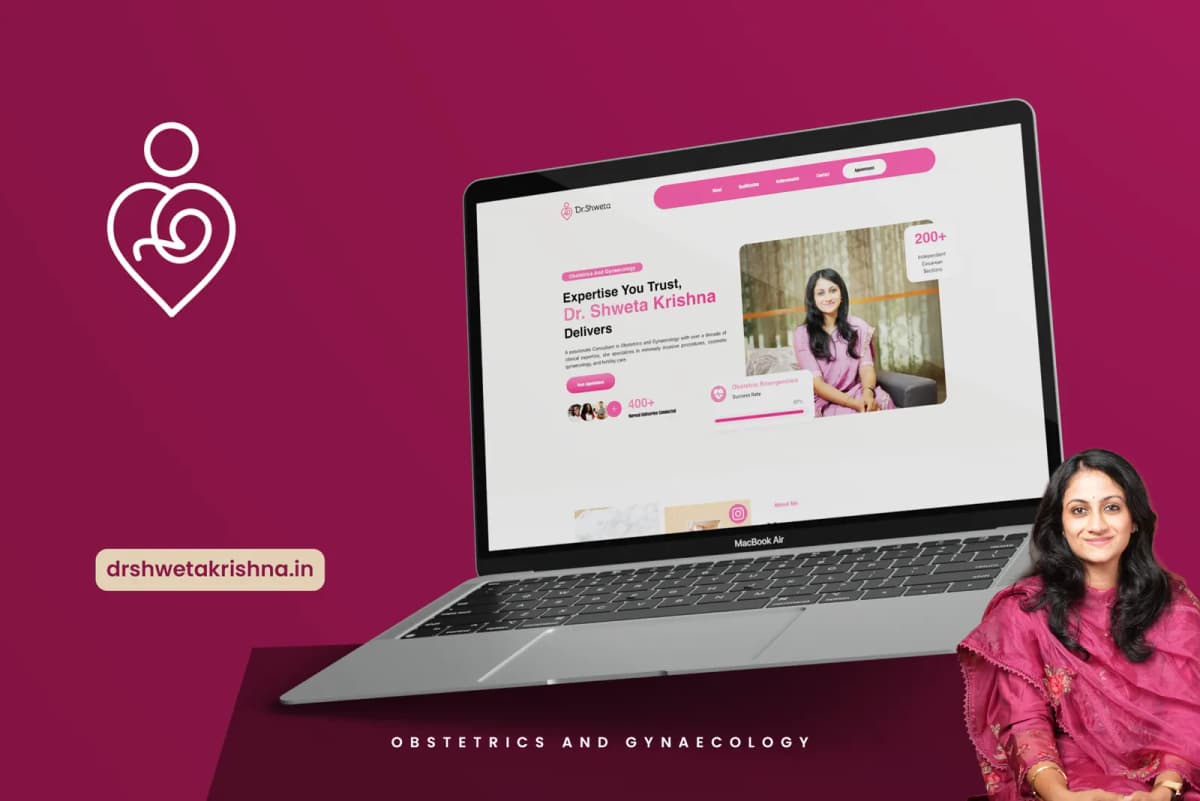
Search and social work together for clinics. Educational Reels made Dr Shweta Krishna's practice approachable to thousands of women; you can see that work in her case study. The same NMC guidelines apply to social media, so read our guide to social media marketing for doctors alongside this one.
If you run a clinic or hospital and want help with SEO that stays factual and compliant, our SEO services team works with doctors, dentists and healthcare brands, and we build patient-friendly websites too.
Work with us
SEO Services from The Coral Flow
Get a free SEO health check. Share your website. We send a recorded walkthrough of your top technical issues and the keywords you are closest to winning.
Frequently asked questions
Is SEO allowed for doctors in India?
Accurate information about your practice, qualifications, location and services, and genuine health education, are generally acceptable. Self-promotional claims, guaranteed results, comparisons with other doctors and paid rankings are where the rules apply. Read the National Medical Commission's current guidelines, issued in October 2026, before publishing.
What is YMYL and why does it matter for doctors?
YMYL stands for Your Money or Your Life: topics where wrong information could harm someone's health, finances or safety. Google holds health pages to a higher standard, so content written or reviewed by qualified doctors, with clear sources, is essential.
Should each doctor have their own page?
Yes. A page for each doctor with their qualifications, registration, experience, special interests and the clinics where they practise helps patients decide and helps Google connect the doctor to the clinic.
How long does SEO take for a clinic?
Local results for a well-set-up clinic often improve within two to four months. Ranking for competitive treatment searches across a city usually takes six months to a year of steady work.
Can I use patient testimonials on my website?
Be careful. Patient privacy laws and the NMC's 2026 guidelines restrict how patient experiences and outcomes can be used in promotion. Check the current guidelines, get written consent for anything you publish, and avoid outcome claims.
Written by
Parves, Founder and Creative Director
Leads strategy and creative direction at The Coral Flow in Chennai, across web, search and content for brands in India and abroad.