Medical Website Design: What Clinics and Hospitals in India Need to Get Right
Medical website design for clinics and hospitals: booking, doctor and treatment pages, trust signals, privacy, accessibility, speed and the 2026 NMC rules.

Quick answer
A good medical website lets an anxious patient find the right doctor, understand the treatment and book in under a minute on a phone. It needs fast mobile pages, online booking or WhatsApp, a page for each doctor and each treatment, clear trust signals such as registrations and real photos, secure forms that collect only what is needed, accessible design and content that follows the National Medical Commission's 2026 advertising guidelines.
When people look at a clinic's website, they are often worried, in pain, or caring for someone who is. They want three answers quickly: can this doctor help with my problem, can I trust them, and how do I book? Good medical website design answers those questions in seconds, on a phone, without making anyone hunt.
This guide covers what clinics, dental practices and hospitals in India need to get right, from structure to compliance.
Start with the patient's three questions
| Question | What answers it on the website |
|---|---|
| Can they help with my problem? | Specialities on the homepage; a page for each treatment and condition |
| Can I trust them? | Doctor profiles with qualifications and registration; real photos; reviews where appropriate; accreditations |
| How do I book? | A booking button on every page; phone and WhatsApp; timings and location |
Everything else is secondary.
Must-have pages
Homepage
- Your specialities, clearly listed
- A Book appointment button that stays visible
- Phone, WhatsApp and emergency contact if applicable
- Locations and timings, or links to them
- A short, factual introduction to the practice
Doctor pages
One page per doctor, with:
- Full name, qualifications and where they were obtained
- Medical council registration number
- Years of practice and areas of special interest
- Languages spoken
- Which clinic locations and days they consult
- A professional photo
- A booking link for that doctor
Treatment and condition pages
One page per major treatment or condition, written in plain language: what it is, symptoms or reasons for treatment, what happens at the first visit, the procedure, recovery, risks and when to seek urgent care. These pages also bring most of your search traffic; our guide to SEO for doctors explains how to structure them.
Locations
For each clinic: address, embedded map, landmarks, parking, public transport, timings, holidays and a direct phone number.
Patient information
Insurance and cashless facilities, what to bring, how to prepare for common procedures, visiting hours for hospitals, and how to get reports.
Booking: make it effortless
Booking is the most important feature on the site.
- Online booking that shows real available slots, by doctor and location, is ideal.
- A simple request form (name, phone, preferred date and doctor) works if real-time booking is not possible, as long as someone calls back quickly.
- WhatsApp is how many Indian patients prefer to book. A visible WhatsApp button, ideally connected to a shared front-desk inbox, captures them. Our comparison of the WhatsApp Business app and API explains the options.
- Confirmation and reminders by WhatsApp or SMS reduce no-shows.
For Dr Shweta Krishna, a gynaecologist, we built a warm, credible website with real-time appointment booking at its centre.
Trust signals
Medical decisions are high-stakes, so trust signals matter more than in almost any other industry:
- Registrations and qualifications on every doctor page
- Hospital affiliations, memberships and accreditations such as NABH where they apply
- Real photographs of doctors, staff, reception and treatment rooms
- A clear privacy policy explaining how enquiry and booking data is handled
- Updated information: dates on articles, current timings, current doctors
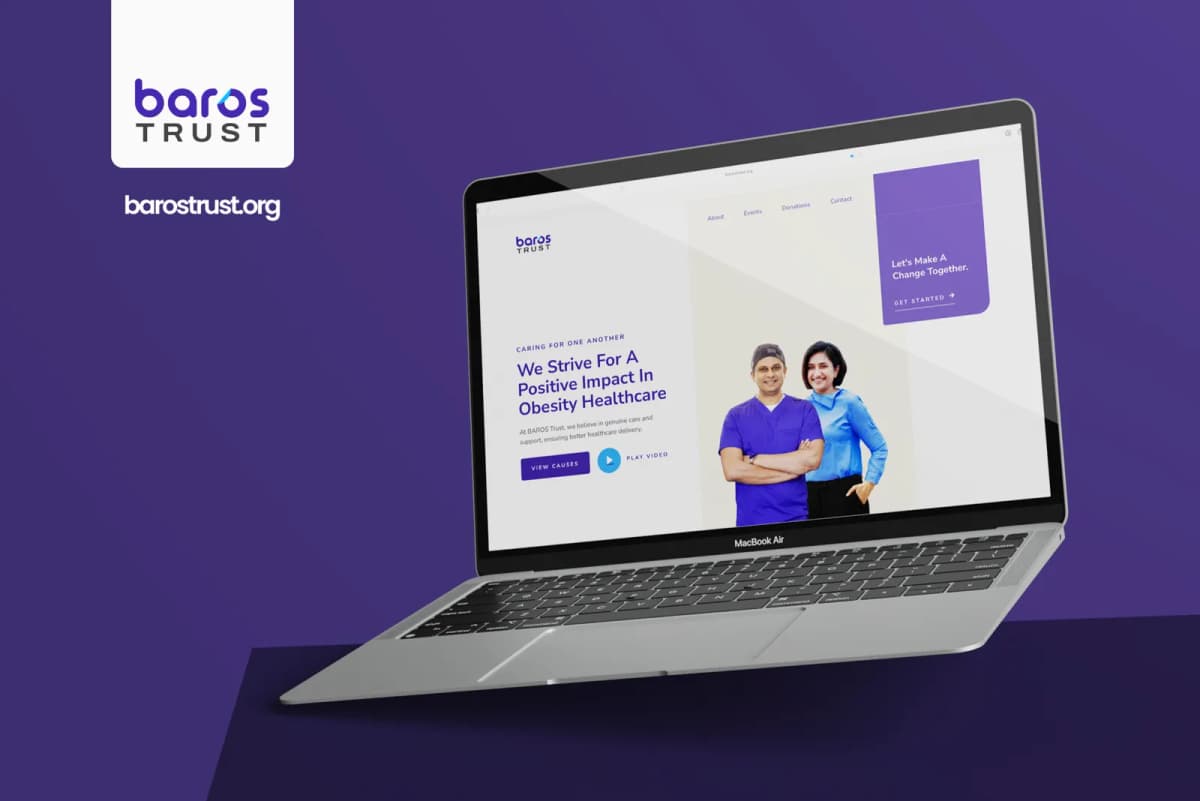
Design that calms, not overwhelms
- Simple navigation: specialities, doctors, locations, patient information, contact
- Readable text: at least 16 pixel body text, good contrast and short paragraphs
- Calm, clean visuals that suit your speciality, avoiding clinical gore and dramatic before-and-after imagery
- Clear calls to action on every page
- No pop-ups interrupting worried visitors
A clear identity helps patients remember and recognise you. For Identity Dental, we created a calm visual identity and a patient-friendly website designed to make the clinic feel welcoming before the first visit.
Accessibility
Patients include elderly people, people with low vision and people using screen readers. Accessible design is good practice and increasingly expected:
- Sufficient colour contrast and resizable text
- Alt text on meaningful images
- Forms with clear labels and error messages
- Keyboard navigation that works
- Captions on videos
Our website accessibility guide has a full checklist.
Speed and mobile
Most patients search on their phones, often in a hurry. Pages should load in a couple of seconds on a mobile connection, and the booking button and phone number should be reachable with a thumb. Check your site's Core Web Vitals; our Core Web Vitals guide explains how.
Privacy and security
- Use https on every page.
- Collect only what you need to book or call back. Do not ask for medical history on a public form.
- Make sure enquiries reach the right person securely, not a shared inbox anyone can read.
- Keep the platform, plugins and hosting updated; see our website maintenance checklist.
- Explain data use in a privacy policy. India's Digital Personal Data Protection Rules are phasing in consent and notice duties through 2027.
Content and the 2026 NMC guidelines
In October 2026, the National Medical Commission issued Guidelines on Ethical Advertising and Public Communication, which cover doctors' and institutions' websites as well as social media. Coverage of the guidelines describes restrictions on self-promotional and superlative claims, guaranteed results, misleading reviews and paid rankings, while health education remains allowed.
For a website, that means:
- Factual descriptions of services and qualifications, not "best" or "number one" claims
- No guaranteed outcomes
- Careful handling of any patient stories, with consent and without outcome promises
- Educational content reviewed by the treating doctors
Read the full guidelines and take advice before publishing promotional material.
Mistakes we see on clinic websites
- The booking button is buried on a contact page instead of on every page.
- Doctors have no individual pages, so patients cannot check qualifications or book a specific doctor.
- Timings are out of date, especially holidays and changed consultation days.
- Stock photos of smiling models instead of the real team and premises.
- One "Services" page lists twenty treatments in a paragraph, so none of them can be found in search.
- Forms ask for too much, such as full medical history, before a patient has even spoken to anyone.
- Phone numbers are images or plain text that cannot be tapped to call on a phone.
- Nobody tests the booking form, and enquiries silently stop arriving after an update.
Each of these is a small fix with a direct effect on how many patients book.
A medical website checklist
- Booking button and phone on every page
- Page for each doctor with registration and qualifications
- Page for each major treatment or condition, in plain language
- Location pages with maps and timings
- Patient information: insurance, preparation, reports
- Real photographs and accreditations
- Fast, readable, accessible mobile design
- Secure forms collecting only necessary details
- Privacy policy
- Content reviewed against current NMC guidelines
If you run a clinic or hospital and want a website patients trust and can book from easily, our website development team builds healthcare websites, and our SEO services help patients find them.
Work with us
Website & App Development from The Coral Flow
Get a free website teardown. Send us your URL. Within 24 hours you get a recorded walkthrough of your speed, SEO and conversion gaps, with the three fixes that would matter most.
Frequently asked questions
What should a clinic website include?
A homepage with specialities and a booking button, a page for each doctor, a page for each major treatment or condition, clinic locations with timings and maps, patient information such as insurance and preparation, and contact options including phone and WhatsApp.
Should a clinic website show prices?
It depends on your speciality and the guidelines you follow. Many practices show consultation details and explain what affects treatment costs, then discuss specifics during consultation. Whatever you show must be accurate and not misleading.
Can a doctor's website show patient testimonials?
Be very careful. Patient privacy rules and the NMC's October 2026 guidelines restrict how patient experiences and outcomes can be used in promotion. Check the current guidelines and get written consent for anything you publish.
How do I make a medical website secure?
Use https everywhere, keep the platform updated, limit admin access, collect only necessary information in forms, and store or forward patient enquiries securely. Never put medical details in unencrypted emails if you can avoid it.
Written by
Parves, Founder and Creative Director
Leads strategy and creative direction at The Coral Flow in Chennai, across web, search and content for brands in India and abroad.